You finished the job. The customer shook your hand, said “great work,” and walked away happy. Maybe they even texted you later to say how pleased they were.
And then nothing. No Google review. Just silence.
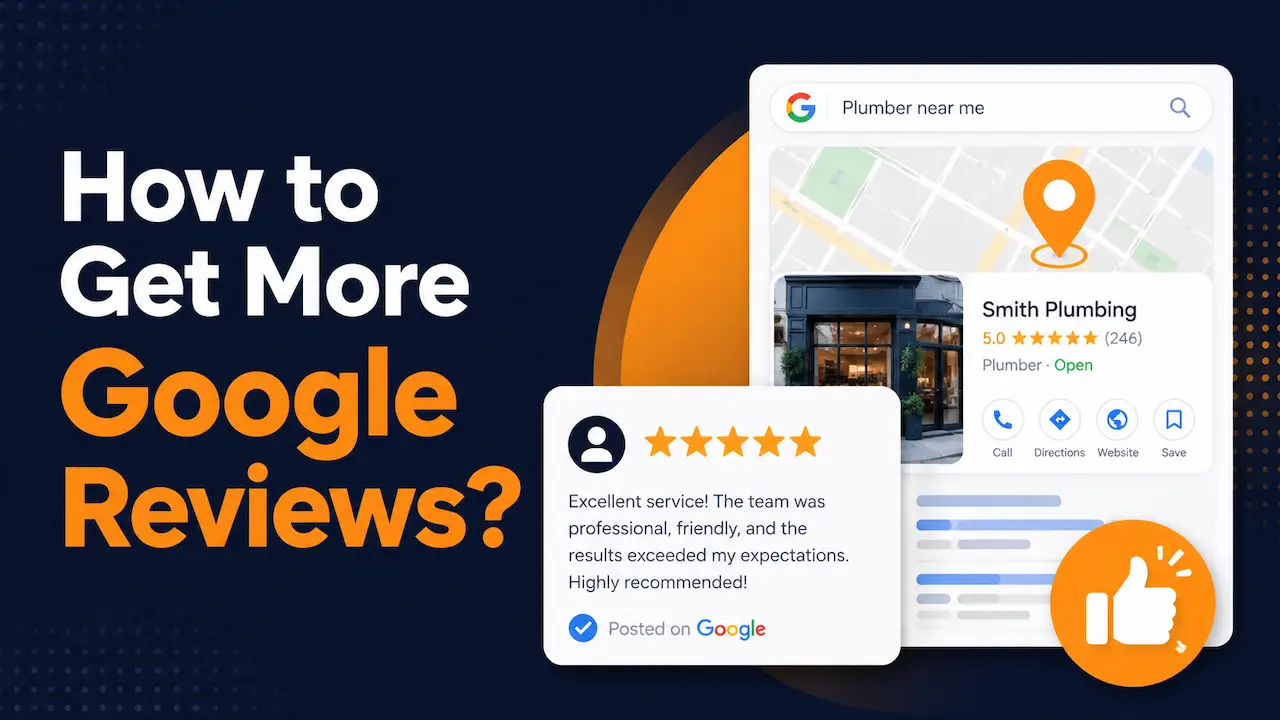
It happens to nearly every local business in Hampton Roads. You do good work. You take care of people. But your Google Business Profile sits there with 8 reviews while the competitor across town has 140, and they’re the ones showing up at the top of the map.
Here’s the hard truth: in local search, perception is reality. Google reviews are one of the most powerful visibility signals your business has. They influence where you rank, whether people click on you, and whether they call. Most business owners know reviews matter, they just don’t have a system for getting them consistently.
That’s exactly what this article is about. By the end, you’ll know why Google reviews carry as much weight as they do, what actually moves the needle in 2025, and the specific steps you can put into practice this week to start building a review pipeline that works on autopilot.
Key Takeaways
- Google reviews directly influence your local search rankings, your click-through rate from the map pack, and whether new customers choose you or a competitor.
- 83% of consumers read Google reviews before making a decision about a local business.
- The single biggest lever most businesses are leaving on the table is simple: they’re not asking.
- Timing, channel, and friction are the three variables that determine whether your ask converts into an actual review.
- Recency matters as much as volume. A steady trickle of new reviews outperforms a one-time burst followed by months of silence.
- Responding to every review, positive and negative, signals credibility and builds trust with future customers who are reading your profile right now.
- You can’t buy reviews or offer incentives for positive ones. Google’s policies are clear, and the consequences aren’t worth it.
Why Google Reviews Matter More Than Ever
Word of mouth has always been the lifeblood of local business. What’s changed is where that word of mouth lives. It used to be a neighbor telling a friend over the fence. Now it’s a stranger leaving a 5-star review that 500 people read before they ever pick up the phone.
According to BrightLocal’s 2025 Local Consumer Review Survey, 83% of consumers read Google reviews before making a decision about a local business. Google is where trust is built or broken before a customer even contacts you. And unlike a referral from a friend, your Google reviews are visible to everyone searching for what you offer in your area.
The numbers are hard to ignore. Reviews on a business’s Google profile can lift conversion rates by 15 to 20% and are linked to revenue gains of up to 18%. Customers are also willing to spend 31% more with a business that has excellent reviews. That’s not a small margin. For a painter, an electrician, or a roofer, even one additional job per month driven by a stronger review profile adds up fast.
There’s also a trust floor that consumers apply. 71% of consumers will not consider a business with an average rating below 3 stars. And 13% won’t engage with anything below 4 stars. If your rating is sitting in that range, you’re being filtered out before the conversation even starts.
If you want to understand how your Google Business Profile ties into all of this, we broke it down in detail in our article on using your Google Business Profile as a free marketing tool. Reviews are a major part of the equation.
How Reviews Actually Affect Your Local Rankings
Let’s get specific about what Google is actually measuring, because “reviews help rankings” is too vague to be useful.
Google’s local algorithm ranks businesses based on three core factors: relevance, distance, and prominence. Reviews live under prominence. They signal to Google that your business is active, trusted, and worth showing to people searching nearby. Review signals account for roughly 15% of local pack ranking factors, making it one of the top three inputs Google uses to decide who shows up in the map.
Within that, Google weighs a few specific things:
- Volume: Businesses ranking in the top three positions of the local map pack average over 240 reviews. More reviews consistently correlate with better visibility.
- Recency: Fresh reviews carry more weight than old ones. A business that earned 10 reviews last month looks more active and credible than one that earned 50 two years ago. If you stop getting reviews for even 3 to 4 weeks, your visibility can slip.
- Star rating: A 4.5-star average puts you in the sweet spot. Businesses with a 4.5+ rating see up to 30% better visibility in local search results. A perfect 5.0 can actually seem suspicious to both Google and consumers, some negative reviews humanize you, as long as you handle them well.
- Review text and keywords: When customers mention specific services, locations, and outcomes in their reviews, Google reads that content. It can reinforce what your business does and where you do it. A review that says “Steven did an amazing job painting our house in Chesapeake, fast, clean, and professional” is worth more algorithmically than “Great service, five stars.”
- Owner responses: Businesses that respond to 80% or more of their reviews see a meaningful boost in both rankings and conversions.
This connects directly to local visibility. If you’re not showing up in the Google Maps results for your service area, reviews are almost certainly part of the problem. We covered the full breakdown of why businesses disappear from Google Maps in our article on why your business isn’t showing up on Google Maps.
And if you want a complete picture of your local SEO health beyond just reviews, our 2026 Local SEO Checklist walks through every factor that matters this year.
What Makes a Review Actually Valuable
Not all reviews are created equal. A one-star rating with no text does almost nothing for you algorithmically, even though it hurts your average. On the flip side, a well-written review that describes the work done, the experience, and the outcome can carry real SEO weight.
The best Google reviews tend to include:
- The specific service the customer received (“They replaced our HVAC system…”)
- The location where the work was done (“…at our home in Newport News”)
- A specific outcome or result (“…and our energy bill dropped by 30%”)
- Something about the experience itself (“Communication was great from start to finish”)
You can’t write the review for them. But you can guide the ask in a way that naturally produces more useful content. More on that in the next section.
Photos also help. Customers can attach photos to reviews, and Google surfaces images prominently on your profile. For contractors and service businesses, before-and-after photos from a review carry serious credibility with future customers scrolling your profile.
How to Ask for Google Reviews (Without Being Awkward)
Here’s the finding that should change how you operate: 77% of consumers will leave a review when asked directly. The vast majority of your happy customers aren’t leaving reviews because nobody asked them to. That’s it. That’s the problem for most local businesses.
The ask itself doesn’t need to be complicated. It needs to be natural, timely, and easy to act on. Here’s how to think about each piece.
Timing the ask right
The best moment to ask is right after a positive experience, while the feeling is fresh. For service businesses, that usually means one of three windows:
- At job completion: If you’re in person and the customer is happy, ask verbally before you leave. Something like: “I’m glad everything came out the way you hoped. If you have a couple minutes, an honest Google review goes a long way for us: I’ll shoot you a link.”
- Within 24 hours by text or email: Follow up the same day or the next morning while the experience is still top of mind.
- After a specific “win” moment: For longer projects, ask after a milestone that the customer clearly reacted well to, not just at the end.
Don’t wait a week. The longer you wait, the more the memory fades and the less likely they are to follow through.
What to actually say
Keep it short and personal. Use their name. Reference the specific job. Make it feel like you’re talking to them, not blasting a form letter.
Here are a few approaches that work for service businesses:
In person: “Hey [Name], I’m really glad you’re happy with how the job turned out. Would you be willing to leave us a quick Google review? It really helps people in the area find us. I can text you a direct link right now so it only takes a minute.”
By text: “Hi [Name], it was great working with you on the [service] at your place. If you have 2 minutes, an honest Google review means a lot to us and helps other homeowners in [city] find reliable help. Here’s a direct link: [your review link]. Thanks!”
By email: Slightly longer is fine via email. Thank them for their business, mention the specific work, and give them a clear direct link. Keep the subject line simple: “Quick favor, would you share your experience?” performs better than something generic.
One subtle addition that produces better reviews: guide them without scripting them. Something like “Feel free to mention the service we did and what stood out about the experience” naturally produces more useful review content without putting words in their mouth.
The Channels That Actually Get Results
Your Google review link is the most important tool in this process. Generate it directly from your Google Business Profile dashboard, there’s a “Share review form” option that gives you a short link you can send or embed anywhere. That link takes customers directly to the review form, skipping the steps of searching for your business and finding the review section.
Every extra click you remove increases the number of people who actually follow through.
SMS / Text
Text is the highest-performing channel for review requests. Messages are opened, and the link is one tap away. Send it within a few hours of job completion and keep the message short. Don’t make them scroll through a paragraph to find the link.
One thing we see consistently with our clients: automated review texts work, but a personalized message sent during an actual text conversation with the customer outperforms automation by a significant margin. When someone gets a message that references their specific job, uses their name, and feels like it came from a real person, not a system, they’re far more likely to follow through. Automation gets you baseline volume. Personal outreach gets you results.
Email works well for follow-up when you didn’t get a text number, or as a second touch for customers who said they’d leave a review but didn’t. Personalize it. Generic review request emails get ignored. We use a review system with our clients that sends an initial email request and automatically follows up 48 hours later for customers who haven’t responded. That follow-up alone captures reviews that would otherwise fall through the cracks, many people mean to leave a review and just need the reminder.
QR codes
A QR code linked to your review page is one of the easiest wins you can set up. Put it on:
- Your invoice or receipt
- A small “leave us a review” card you hand to customers at job completion
- A sign in your physical location if you have one
- The back of your business card
You can generate a QR code for your review link for free using any online QR generator. Print it, laminate it, and put it somewhere visible.
In person
This is underused. If you or your team are on-site with customers regularly, the verbal ask at the moment of completion, combined with immediately texting them the link while you’re still there, is one of the most effective combinations. The customer feels the goodwill in real time, and the link is in their pocket before they forget.
On your website
Add a “Leave a Review” button or link to your contact page, thank-you pages, or footer. This isn’t going to drive the bulk of your reviews, but it removes friction for customers who are actively looking for how to review you. A well-designed website should make this easy, if yours doesn’t, that’s worth fixing. We cover what a converting local business website looks like in our website redesign guide.
Build a Review System, Not a One-Time Push
One of the most common mistakes local businesses make is treating reviews as a campaign rather than a consistent process. They send out a batch of requests after reading an article like this, get a surge of reviews, and then go quiet for six months.
That approach works against you. Review recency is a ranking signal. A steady trickle of new reviews every month signals to Google that your business is active and customers are engaging with it right now. A one-time burst followed by a long gap does not.
The goal is to make the ask a standard part of every job’s close-out process. Not an afterthought. Not something you remember to do occasionally. A step in your workflow, the same as collecting payment or sending the final invoice.
A few ways to systematize it:
- Automated email or text requests: A review system that sends an initial request shortly after job completion, and follows up automatically 48 hours later, creates a reliable baseline without requiring manual effort every single time.
- If you invoice by email: Add a PS at the bottom of every invoice with your review link.
- If you have employees: Train them to make the verbal ask before leaving the job site. Make it part of the job checklist.
- If you do follow-up calls: Add the review ask to your script after confirming customer satisfaction.
You don’t need fancy software to start. A saved text message template and a direct review link is enough to build real momentum.
One of our clients takes it a step further. Once a week, they set aside time to personally reach out to every customer they served that week. They check in, make sure everything went well, answer any questions, and, naturally, ask for a Google review. The result is 10 or more new reviews every single month. But what’s worth noting is that it’s not just a review tactic. It’s a customer service touchpoint that happens to produce reviews as a byproduct. Customers feel taken care of. Questions get answered before they become complaints. And the goodwill that generates translates directly into more detailed, more enthusiastic reviews. If you can build that kind of intentional follow-up into your weekly rhythm, you’ll outpace almost every competitor in your market on reviews alone.
For a broader look at the digital marketing systems that support local business growth, see our 2026 marketing reset guide.
How to Respond to Reviews, and Why It Matters
Most local business owners think about reviews as something that happens to them. The smarter play is to treat your review section as an active conversation that future customers are watching.
Here’s the stat that should change your behavior: 97% of people who read reviews also read the business’s responses. Your response is public. It’s not just for the person you’re replying to, it’s for every future customer who comes across your profile.
A few principles for responding well:
Responding to positive reviews
Keep it personal. Mention their name, reference the specific job, and thank them genuinely. Avoid copy-paste responses, customers notice when every reply is identical. A short, warm, specific response does more than a long generic one.
Example: “Thanks so much, [Name], really glad the bathroom remodel came out the way you envisioned it. We appreciate you trusting us with the project and for taking the time to share your experience.”
Responding to negative reviews
This is where most businesses either completely drop the ball or make things worse. The right approach:
- Respond promptly. Don’t let negative reviews sit without a reply for days or weeks.
- Don’t be defensive. Even if you believe the review is unfair, the response is your opportunity to show future customers how you handle problems.
- Acknowledge, apologize where appropriate, and offer to resolve it offline. “We’re sorry to hear this wasn’t the experience you expected. Please reach out to us directly at [phone/email] so we can make it right.”
- Keep it short. A long defensive reply reads as combative. A calm, professional response reads as trustworthy.
Google itself recommends replying to all reviews as a best practice, and there’s data to support it: businesses that respond to 80% or more of their reviews see measurable gains in both rankings and click-through rates. Google’s official guidance on responding to reviews is worth bookmarking.
What Not to Do: Google’s Rules and Why They Exist
There are practices that work short-term and blow up long-term. A few of them are tempting enough that it’s worth naming directly.
Don’t offer incentives for positive reviews
Paying customers, offering discounts, or giving free services in exchange for positive reviews violates Google’s policies. If Google detects it, and they’re getting better at detecting it, your reviews can be removed, or your profile can be suspended. The risk isn’t worth it. Build your review count the right way.
Don’t “gate” your review requests
Review gating means only asking happy customers to leave a review while routing unhappy ones to a private feedback form. It’s designed to cherry-pick positive reviews and suppress negative ones. Google explicitly prohibits this. Ask all your customers, the mixed signal of an occasional honest 3-star review with a thoughtful response from you actually builds more trust than an all-5-star profile that looks curated.
Don’t ask for “5-star reviews”
Asking for a specific rating violates Google’s guidelines and can get your reviews removed. Ask for honest reviews. Most satisfied customers will give you five stars on their own. If they don’t, that feedback is useful anyway.
Don’t buy fake reviews
This should go without saying, but it’s a real market. Fake reviews get removed in bulk, can result in Google penalizing your profile, and consumers are increasingly good at spotting them. Roughly 50% of consumers say they’ve spotted a fake Google review. Nothing kills trust faster than a profile that looks manufactured.
Reviews Are One Piece of the Puzzle
Google reviews matter a lot. They’re also one element within a larger local digital presence that either works together or fights itself.
A business with 200 reviews but an incomplete Google Business Profile, an inconsistent name and address across directories, and a slow mobile website is leaving visibility on the table. Reviews amplify a profile that’s already well set up. They struggle to carry a profile that has foundational problems.
A few things worth checking alongside your review strategy:
- NAP consistency: Is your business name, address, and phone number identical everywhere it appears online? Inconsistencies confuse Google and suppress local rankings. We covered this in depth in our article on NAP consistency and local SEO.
- Google Business Profile completeness: Is every field filled out? Services listed, hours accurate, photos uploaded, Q&A section active? An optimized profile gives your reviews more places to work.
- Local SEO foundation: Reviews alone can’t fix structural local SEO issues. Our local SEO services address the full picture, not just one piece of it.
- Your website: A review that sends someone to a slow, outdated, or confusing website kills the conversion your reviews earned. If your site needs work, read our piece on when it’s time for a website redesign.
- Visibility beyond Google: Local visibility is broader than just your Google profile. Our article on local business online visibility walks through what a complete presence looks like.
When all of these pieces work together, Google reviews become a multiplier. When the foundation has cracks, reviews can only do so much.
If you’re not sure where your biggest gaps are, our guide on marketing mistakes that keep you invisible online is a good starting point.
Frequently Asked Questions
How many Google reviews does my business need?
There’s no magic number, but businesses that rank in the top three map pack positions average more than 240 reviews. In practice, getting to 25 to 50 solid reviews puts most local businesses ahead of the majority of their competitors. From there, the goal is consistency, a steady flow of new reviews monthly matters more than hitting a specific total and stopping.
How do I get my Google review link?
Log into your Google Business Profile at business.google.com. In the dashboard, look for “Ask for reviews” or “Share review form.” Google will generate a short link you can copy and paste anywhere, into a text, an email, a QR code, or your website.
Can I ask employees or friends to leave reviews?
Google’s policies prohibit reviews from people who haven’t had a genuine experience with your business. Reviews from current employees, owners, or anyone who didn’t actually receive your services are against Google’s guidelines and can be removed. Focus on real customers, there are plenty of them.
What should I do if I get a fake negative review?
Flag it through your Google Business Profile dashboard using the report function. Provide as much context as possible explaining why it violates Google’s policies. While Google doesn’t remove reviews quickly, flagging is the right first step. In the meantime, respond professionally as you would any negative review, future customers will see how you handle it.
Does responding to reviews actually help my rankings?
Yes. Responding to reviews is a signal of active engagement and credibility. Businesses that respond to 80% or more of their reviews see measurable gains in both local rankings and conversion rates. It also adds fresh, keyword-relevant content to your profile that Google indexes.
How long does it take for new reviews to impact my rankings?
Most businesses see some movement in local visibility within 2 to 4 weeks of building consistent review momentum. Significant changes typically take 2 to 3 months. The key is not stopping. Consistent, ongoing reviews compound over time, this is not a one-time project.
Ready to See Where You Stand?
Your Google reviews matter. So does everything surrounding them, your Business Profile, your local citations, your website, your ad presence. It’s hard to know which piece is holding you back without looking at the full picture.
That’s exactly what our free Online Visibility Audit is designed to do. We look at your Google Business Profile, your reviews, your local search rankings, and your overall digital footprint, and give you a clear read on where you’re winning and where you’re leaving leads on the table.
No pitch. No pressure. Just real information you can act on, whether you work with us or not.
Claim your free Online Visibility Audit and find out exactly where your local presence stands today.
Or if you want to see what a full local digital marketing partnership looks like, explore our services and pricing, built specifically for local businesses in Hampton Roads and beyond.